Recover permanently deleted emails and folders in Outlook
- Last updated: Sep 12, 2026
- Email Recovery
Permanently deleted Outlook emails and folders may still be recoverable, but time is of the essence. When you empty the "Deleted Items" folder or bypass it entirely using the Shift + Delete shortcut, your messages aren't immediately removed. Instead, if you are using a Microsoft 365 or Exchange account, Outlook moves these messages to a hidden directory known as the "Recoverable Items" folder. As long as the messages remain there and have not been permanently purged, you can restore them to your inbox using Outlook's built-in recovery options. For Microsoft's official recovery steps, see Recover and restore deleted items in Outlook
However, Outlook's built-in recovery has its limits. Items in the Recoverable Items folder are typically retained for 14 to 30 days before they are permanently purged, though the exact timeframe depends on your organization's retention policies. If that recovery window has passed, or if you are using a local Outlook Data Files (.pst or .ost) rather than an Exchange server, the standard recovery methods won't work. In these situations, your best chance of recovery may be a recent backup or specialized recovery software that can scan the Outlook data file for deleted items.
Where to Look for Deleted Outlook Emails and Folders
When an important email or an entire folder disappears from Outlook, it may not be permanently lost right away. Depending on how the item was deleted and your account type, Outlook may store deleted emails and folders in several specific locations. If you are trying to recover a missing message or deal with an accidentally deleted folder, here is exactly where to look, in order of priority:
- The Deleted Items (or Trash) Folder: This is your first place to look. When you press the Delete key or click the trash can icon, emails are normally moved here. As long as you haven't emptied this folder, you can move the email back to your Inbox.
- The Archive Folder: Often, users accidentally hit the Backspace key (or swipe left on mobile), which moves the email to the Archive folder instead of deleting it. Check the Archive folder, or use Outlook's search to find a message that may have been moved to another folder.
- The Recoverable Items Folder: If you emptied your Deleted Items folder, deleted an email with Shift + Delete, or deleted an entire folder, the items may still be available in the hidden Recoverable Items folder. You can access this by going to your Deleted Items folder and clicking the "Recover items recently removed from this folder" link at the top of the window (available for Microsoft 365 and Exchange accounts).
- Local Outlook Data Files (.ost or .pst): If you are using a POP or IMAP account, or if the server retention period has expired, your deleted emails may still exist as raw data inside your local Outlook Data File (.pst or .ost). While you can no longer see them in Outlook, the underlying data may remain in the file until it is overwritten by new activity. In these situations, your best chance of recovery is to use a recent data backup or specialized recovery software to extract the messages before they are permanently lost.
Important: To increase your chances of recovering a deleted Outlook folder or email, close Outlook and avoid making any changes to your mailbox. This includes sending or receiving new emails, creating new folders, or moving items. The more changes you make, the greater the risk of altering the Outlook data that may still contain the deleted items. Before proceeding to the next steps, we recommend creating a backup copy of your current Outlook data file (.pst or .ost).
Recover Deleted Emails and Folders from a PST or OST File
When Outlook's standard recovery tools fail, the next step is to work directly with your local data file. This is where specialized recovery software like PST Walker can help. Rather than relying on the standard mailbox interface, PST Walker deeply scans your .pst or .ost files for deleted emails and folders that are no longer visible in Outlook, helping identify data that may still remain in the file.
- Launch PST Walker: Download PST Walker to your computer and launch the application.
- Open the Data File: Browse to the .pst or .ost file you want to recover data from and click Open.
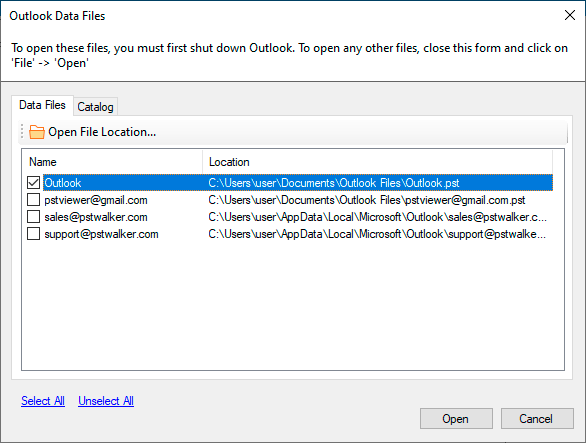
- Scan for Deleted Items: Select the mailbox, click the Recoverable Items button, and wait for the scanning process to finish.
- Preview Deleted Items & Versions: In the All Folders pane, select Recoverable Items folder to view all your deleted items and folders.
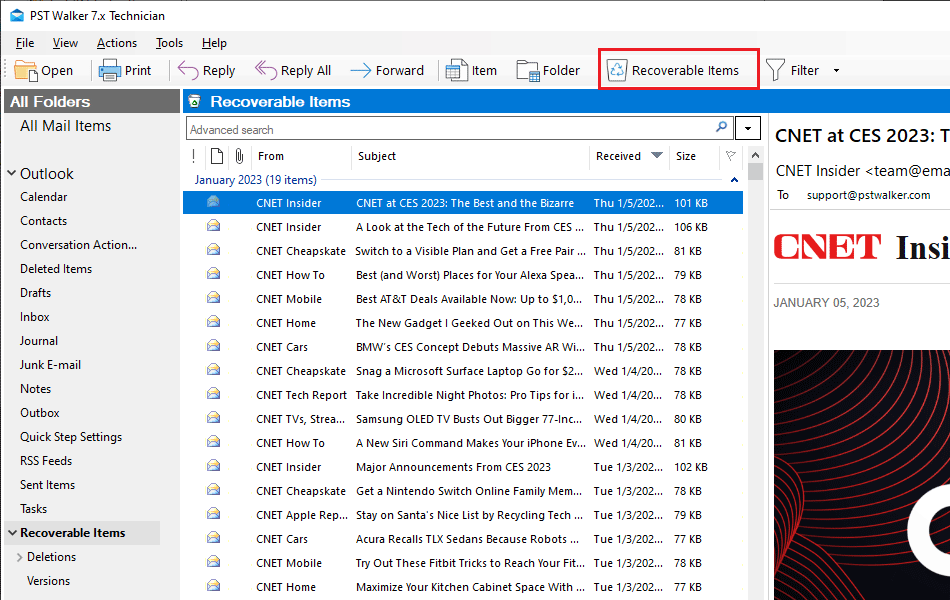 Note: When you delete a folder in Outlook, it first moves the contained emails to Deleted Items before removing the folder structure and its contents together.
- Restore Specific Items: Select the message you want to restore and click File > Save As.... To select multiple items, hold down the Ctrl key while clicking on them.
- Export All Deleted Items: To restore all deleted items and folders at once, click File > Export, choose PST - Outlook Data File and All items in this folder and subfolders, then click Ok.
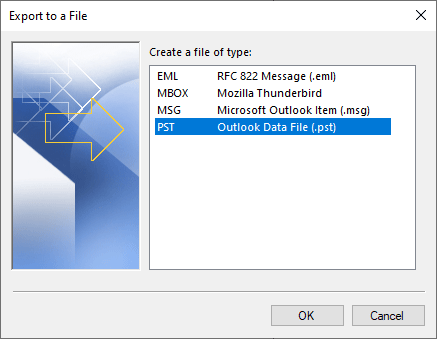
- Open Your Restored File: Open the newly exported .pst file in Outlook to access your restored emails and folders.
What If Recoverable Items Is Not Available?
PST Walker can help recover deleted Outlook emails and folders when the underlying data is still present in the .pst or .ost file, even if the items are no longer visible in Outlook. It can scan the data file for deleted items and help identify messages and folders that are not accessible through Outlook's standard interface. This can be especially useful when the Deleted Items folder has been emptied or the built-in recovery period has expired.
However, recovery is not guaranteed. PST Walker cannot recover data that has already been overwritten, removed from the data file, or is otherwise no longer present. For this reason, close Outlook and avoid making changes to the affected data file before attempting recovery. Creating a backup copy of the original .pst or .ost file first also helps preserve the remaining data and allows you to try different recovery methods without modifying the original file.
Note: PST Walker provides two options for opening an Outlook Data File. Like Microsoft Outlook performs a quick scan using file metadata and is suitable for normally structured files. Extensive Scan performs a full file scan to find email and folder records that may not be accessible through the standard file structure. It can also be used to display Outlook's internal structure or work with damaged and corrupted files. Extensive Scan takes longer than the Like Microsoft Outlook option.
Frequently Asked Questions
See Also
Recovering emails from an OST file
There are several tools available that can help you recover data from an OST file. They can help you recover important data from your OST file and save it in various file formats for future use.
Recover Deleted Items is grayed out in Outlook
If you accidentally deleted an email message or emptied the items folder in your Outlook mailbox, you can recover those items even if Recover Deleted Items is grayed out in Outlook.
Recover emails in Outlook for Microsoft 365
Learn how to troubleshoot missing data or emails in Outlook for Microsoft 365, and the steps to recover them if possible. Recover deleted messages in a user's mailbox in Exchange Online.